The Psychology Behind Why We Spend More on Fast Food Than We Plan To
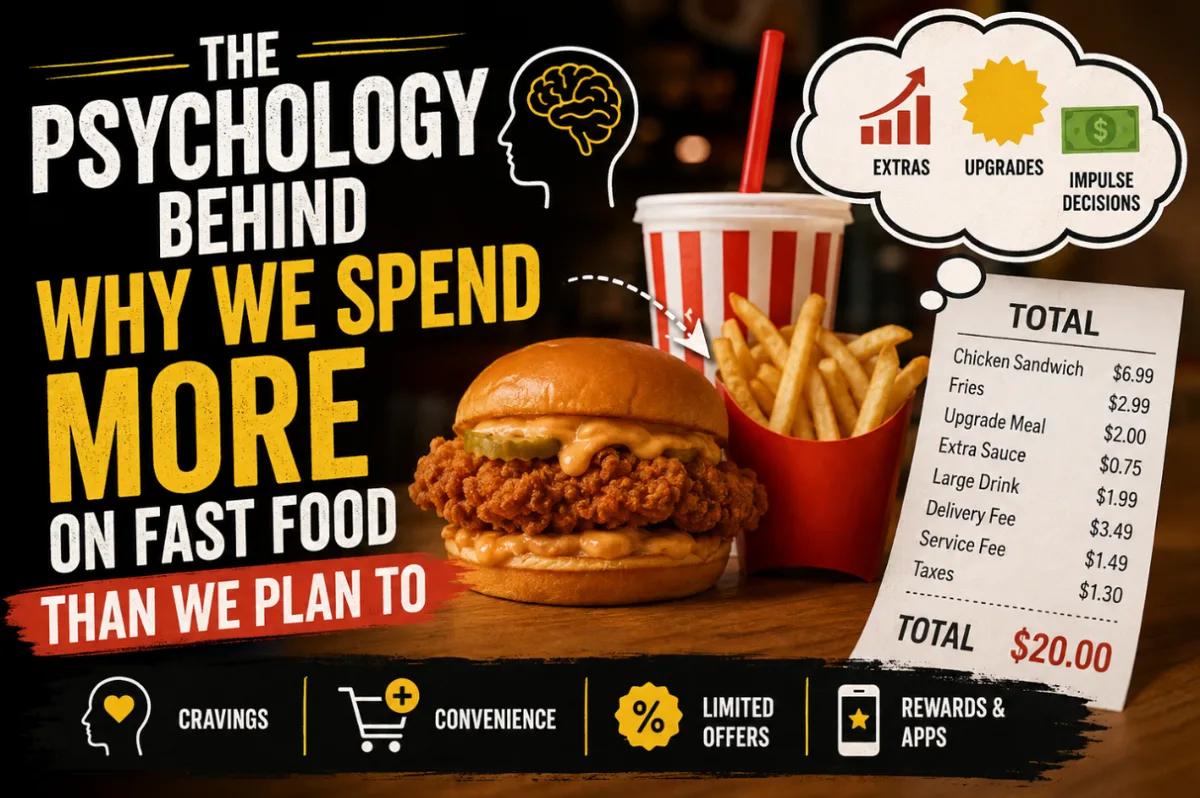
Fast food is supposed to make life easier. You choose a meal, place an order, pay, and move on with your day. Yet many people have had the same experience: they start with a simple meal in mind and end up spending much more than expected. A meal that seemed like a quick $10 purchase can easily become a $15 or $20 order. An extra side, a drink, a larger portion, or a delivery fee can quietly increase the total. So why does this happen so often?
The answer is not simply that people make poor spending choices. Fast-food ordering involves several psychological factors — convenience, cravings, menu design, rewards, limited-time offers, and digital ordering can all influence how we spend. Understanding these habits can help diners make better decisions without giving up the foods they enjoy.
Convenience changes how we spend
Convenience has a powerful effect on buying decisions. When people are hungry, they often want a solution that requires little effort. Fast food provides exactly that — no grocery shopping, meal preparation, cooking, or cleaning afterward. That convenience can make the price feel less important.
Imagine coming home after a long day. You are tired and hungry. Cooking dinner may take 30 minutes or more; ordering a favorite meal takes only a few minutes. At that moment, you are not only paying for food — you are also paying for time and convenience. This is one reason people may add something extra to their order. The focus shifts from saving a few dollars to getting the meal they want with minimal effort.
Hunger can affect spending decisions
Hunger can also change the way we make choices. When people are very hungry, large meals can appear more appealing. A regular meal may suddenly seem too small, and adding fries, a side, dessert, or a larger drink feels reasonable. The problem is that several small decisions add up quickly.
A customer may start by choosing a main item. Then they see an appealing side. Next comes a drink. A sauce or dessert may follow. Each purchase seems small on its own — the final bill tells a different story. A useful habit is to decide what you actually need before browsing every available option. This reduces the chance of making several hunger-driven decisions.
Menu design can influence what we choose
Fast-food menus are designed to make choices easier — but they can also encourage customers to spend more. Photos, descriptions, meal combinations, highlighted items, and upgrade options can draw attention toward certain products. A customer may plan to order one item, then a combo appears to offer better overall value: a side and drink for only a little more, which makes the upgrade feel like a smart decision.
Sometimes it is a good value. Other times, the customer only wanted the original item — and this is an important distinction. A discount does not automatically mean you are saving money. If you spend money on something you did not originally want, your total spending still increases.
Small extras have a big effect
One of the easiest ways to overspend is through small additions. An extra side might not seem expensive. Neither does a drink or additional sauce. But several extras can turn a simple order into a much larger purchase. This is the "small purchase" effect: people often pay less attention to small amounts than to larger individual purchases.
Consider an order that starts at $9. Adding a $2 side and a $2 drink may not feel significant. Add another item, and the total changes again. The lesson is simple: look at the final total instead of judging each addition separately. Before checking out, remove anything you would not buy if it were offered separately.
Digital ordering makes extra spending easier
Ordering through an app or website offers plenty of convenience — and it also removes some of the friction involved in spending money. At a restaurant counter, you may see your total and think about your purchase before paying. Online, adding another item can take only one tap. Digital menus also make it easy to customize meals, add extras, select upgrades, and browse promotional items.
This does not mean online ordering is bad — it simply means customers should pay attention to their cart. A useful strategy is to build the order first and then review it before payment, asking whether every item was part of the original plan.
Rewards programs can change buying habits
Restaurant rewards programs are another interesting part of the spending equation. Rewards can provide genuine value — points, special offers, or discounts on future purchases. However, they can also encourage people to visit more often. Spending $10 to earn points toward a future reward may feel better than spending $10 without receiving anything extra; the psychological appeal comes from feeling that the purchase is working toward a benefit.
The key is to remember that points only have value when you actually wanted the purchase. Buying food you do not need simply to earn points is not a saving strategy.
Limited-time offers create a sense of urgency
Limited-time promotions can make customers feel that they need to act now. A normal menu item may not attract much attention; add a message suggesting the offer will not last forever, and the same product can suddenly feel more desirable. This works because people naturally dislike missing opportunities. A customer might think, "Maybe I should try it before it disappears" — and that thought can lead to an unplanned purchase.
Limited-time offers are not necessarily bad. Trying something new — a seasonal shake or a limited-edition collab meal — can be part of the fun of eating out. The important thing is to recognize the difference between genuinely wanting an item and simply fearing that you will miss it.
Cravings can override a budget
Food cravings can be surprisingly persuasive. When someone has a specific craving, alternatives may not feel equally satisfying — a person might plan to spend $10 but choose a more expensive option because it matches what they want. This is especially common with strongly flavored foods: spicy chicken, crispy sides, creamy sauces, and sweet drinks create a powerful combination of taste and anticipation.
Dave's Hot Chicken, for example, is built around a highly specific craving: hot, crispy chicken with different heat levels and sides. When the craving is strong, customers may focus more on satisfaction than price. Knowing this can help you plan ahead — if you already know what you want, decide on a spending limit before opening the menu.
Delivery can make overspending less noticeable
Delivery adds another layer to the psychology of spending. Customers may focus on the food price while paying less attention to additional costs — delivery charges, service fees, taxes, and tips can all increase the final amount. Because these costs may appear later in the checkout process, the original price can create an inaccurate expectation.
Pickup can sometimes provide a lower final cost, depending on the restaurant and location. Before ordering, compare the complete checkout total rather than only the advertised meal price.
Coupons can help, but use them strategically
Coupons are useful because they can reduce the cost of something you already planned to buy — and that phrase, already planned to buy, is the key. A coupon should ideally reduce an existing expense rather than create a new one. Someone who already plans to order dinner can check for available promotions before completing the purchase. Resources that track offers, such as a Panda Express coupon code, can be useful when comparing ways to lower the cost of a planned meal.
The same principle applies to restaurant apps, loyalty rewards, and promotional deals. The goal is not to find an excuse to spend — it is to spend less on something you already wanted.
Create a simple fast-food budget
You do not need a complicated system to control restaurant spending. Start with a simple weekly or monthly budget — decide that you will spend a fixed amount on fast food each week, and once you reach that limit, additional purchases need more consideration. You can also set a spending range for individual meals: if your normal target is $10 to $15, an occasional larger meal may be fine, but frequent $20 orders can quickly change your monthly spending. A budget creates a boundary before hunger and cravings take over.
Then add one more habit that is as easy as it is effective: pause for 30 seconds before you check out. Look at the entire cart and ask yourself:
- Did I plan to buy every item?
- Am I adding something because I am hungry right now?
- Is the promotion actually saving me money?
- Do I really need the upgrade?
- Would I still buy this item without the discount?
- Have I checked the final total?
These questions create a small gap between the craving and the purchase — and that gap leads to better decisions.
You can enjoy fast food without overspending
Spending more than planned does not mean you lack discipline. Fast-food restaurants are designed around convenience, variety, strong flavors, and easy choices. Those features make eating out enjoyable, but they can also influence how much we buy. The solution is not to avoid fast food completely.
Instead, understand the habits behind your decisions: check the full price, watch small additions, question unnecessary upgrades, and use legitimate promotions when they fit your plans. Most importantly, decide what you want to spend before hunger makes the decision for you. Once you understand the psychology behind fast-food spending, it becomes easier to enjoy your favorite meals while keeping your budget under control.
Frequently asked questions
Why do I always spend more than I plan to on fast food?
Because fast-food ordering is built around convenience, cravings, menu design, and small add-ons that each nudge the total higher. Hunger makes bigger meals look reasonable, combos feel like value, digital carts make extras a one-tap decision, and delivery fees appear late in checkout. The individual choices feel small; the final bill adds them all up.
How can I stop overspending at fast-food restaurants?
Decide what you want and set a spending limit before you open the menu, then pause for 30 seconds before checkout and review the full total — not each item separately. Remove anything you wouldn't buy if it were offered on its own, and only accept upgrades or coupons for things you already planned to buy.
Do combos and upgrades actually save money?
Sometimes, but not automatically. A combo is only a saving if you genuinely wanted the side and drink it includes. If the upgrade adds items you didn't originally want, your total spending still goes up — a discount on something unplanned is still extra money spent.
Is it cheaper to order pickup or delivery?
Pickup is usually cheaper. Delivery adds a delivery fee, service fee, taxes, and a tip, and third-party apps often mark up menu prices too — costs that appear later in checkout and can add 25–40% over the same order picked up. Always compare the complete checkout total, not just the advertised meal price.
Do rewards programs make me spend more?
They can. Rewards offer real value, but the feeling of earning points toward a future reward can encourage extra visits and purchases. Points only save you money when you actually wanted the purchase — buying food you don't need just to earn points isn't a saving strategy.